
Here’s Johnny! The CEO Who Was Always There

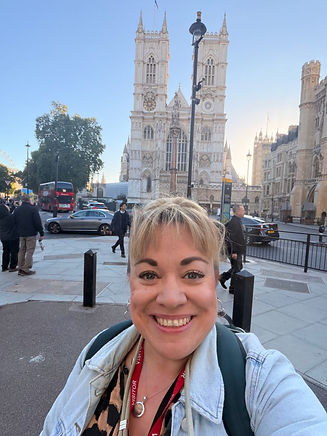
I recently had the absolute pleasure of seeing Barack Obama in Manchester. For 90 minutes, he spoke about everything from world affairs and economics to politics and AI and it was fascinating. One comment in particular made me chuckle. Reflecting on the demands of the presidency, he said: “To do the job right, I was working 18-hour days and reading a lot… not every president does that.”
And fair enough he worked those hours. He was President of the United States, elected to arguably the most powerful position in the world, the job came with extraordinary responsibility, and apparently, some very long days.
But, I hate to break it to you dear reader… you are not the President of the United States.
Someone had to say it.
There can be an unspoken expectation that a CEO should always be available, and that unspoken expectation is usually coming from your own brain, rather than out of the mouths of your Board members (and if it is coming from your Board, then that’s a whole other issue). It is understandable that a CEO is the person people look to when something needs deciding, reassuring or sorting out. So it can feel as though being a good CEO means being permanently switched on.
It doesn’t, it shouldn’t, and for your own health and those around you, please take some time to consider having boundaries.
Having boundaries doesn’t mean caring less about the organisation or the people in it. It means recognising that leadership is a job you do, not a state you have to be in every hour of the day. CEOs need time to rest, think and have a life outside work, just like everyone else. Fun fact of the day; CEOs are just regular humans.
And think about it from the perspective of your staff, do they really need you there haunting them constantly, popping your head through a broken door all the time? Probably not.
In fact, boundaries can help a CEO lead better. When people are clear about when and how you’re available, they know what to expect. They feel trusted as you’re not breathing down their neck. When you protect time to recover, you’re more likely to bring energy and good judgement to the decisions that matter, and when you model healthy boundaries yourself, you give others permission to do the same.
That doesn’t mean every boundary is simple to hold. There will be urgent situations, difficult periods and moments when the CEO does need to step in. The point is not to be unavailable; it’s to be intentional, so that being available when it matters is sustainable.
I have personal experience of this from my time as CEO and learned the hard way about not setting boundaries, becoming exhausted and burnt-out. Whilst my amazing team had pretty much 24/7 access to me if they wanted it, it did NOT make me a better CEO for them to have it. Cut a long story short, I stopped making myself available 24/7; I’d log out of Teams and emails at the weekend. A chosen few had my personal phone number and knew if there was a genuine emergency they could phone me (and I think they had to do it once). What that meant was that I was well rested, I wasn’t constantly distracted at home thinking about work, and when I turned up on Monday morning I was full of beans and definitely a much better CEO.
If you don’t have boundaries set at the moment, it can feel daunting to let go, I get it, the fear of not looking at your email for a whole evening or weekend can feel scarier than the first time you watched The Shining. But be honest with your team, vulnerability in leaders is a huge strength (that’s a whole other blog!), and as we’ve discussed, it doesn’t mean you are not available to urgent situations, but it does mean you won’t be irritated by an email at 2pm on a Saturday as you’re about to embark on a family day out over the fact that Steve may or may not have misplaced the filing cabinet keys. Sort it out Steve.
So to sum up, it is not only ok, but it is strongly encouraged to have boundaries when you are a CEO. You will be better for it, you team will be better for it, and remember, as important as your job is, you are not the President of the United States.
If you’re a CEO trying to work out where your boundaries sit, you don’t have to figure it out alone. Our free Atkinson Learning Circle brings sector leaders together every quarter to share what’s working and what isn’t.
Don’t miss out on our latest Blogs; if you haven't already, sign-up and become a member of our community here.


Comments